Guangzhou’s Chongyang Mountain Climbing Culture: A Blend of Tradition and Modernity
รากฐานทางประวัติศาสตร์: From Northern Origins to Lingnan Adaptation
Guangzhou’s Chongyang mountain climbing tradition, recognized as a municipal intangible cultural heritage in 2007, traces its origins to the Central Plains. ในสมัยราชวงศ์หมิงและชิง, the practice flourished in locations like Yuexiu Hill and the Twin Pagodas (Liurong Temple and Guangta Temple), as documented in Qu Dajun’s Guangdong New Language. The festival’s core rituals—climbing hills for blessings, flying “resounding bow kites” (a type of bamboo-whistle kite), and consuming chrysanthemum cakes—were fully established by the Qing era.
A unique local legend further enriched the tradition: the story of Zheng Anqi, a Taoist herbalist who ascended to immortality on Baiyun Hill while gathering medicinal herbs. His myth, commemorated through the Zhengxian Festival (July 25th on the lunar calendar), merged with Chongyang’s celebrations, introducing rituals like collecting calamus roots and spinning “lucky windmills” atop mountains. By the 1970s, Baiyun Hill had supplanted traditional sites as the primary venue, drawing over 100,000 climbers annually by the late 20th century.
Symbolic Practices: Rituals of Luck, Health, and Ancestral Memory
Central to Guangzhou’s Chongyang are rituals imbued with symbolic meaning. Climbers carry windmills to “transport good fortune” and place them at home after descending, a practice tied to the numerological homophones in Cantonese—“windmill” (feng che) sounds like “luck turns” (feng yun zhuan). The climbing itself, often undertaken on the eve of Chongyang, symbolizes transcending misfortune and embracing renewal, with many staying overnight to “greet the dawn” (da di qi), a tradition believed to absorb earth’s vitality.
Food also plays a role: nine-layered chrysanthemum cakes (juhua gao) represent “step-by-step ascension,” while offerings of wine infused with chrysanthemum petals reflect ancient beliefs in longevity. In some districts, families combine Chongyang with autumn ancestral worship (shuangji), tending to graves on Baiyun Hill or nearby peaks while sharing meals made with seasonal produce.
Modern Transformations: Innovation Meets Heritage
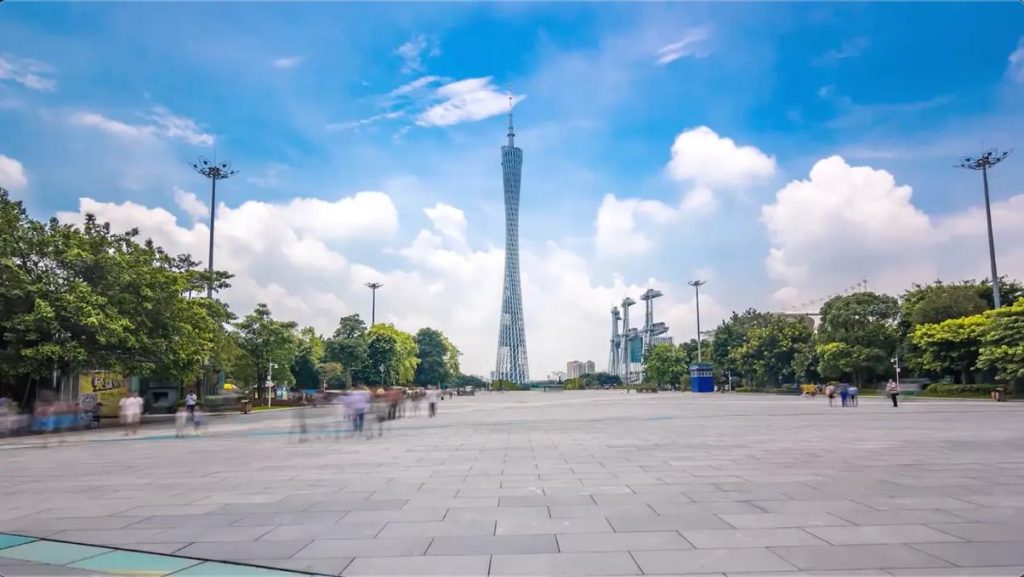
วันนี้, Guangzhou’s Chongyang adapts to contemporary life while preserving its essence. เนื่องจาก 2020, the city has designated 11 official climbing venues, including landmarks like Canton Tower and Lotus Hill, attracting diverse participants—from elderly groups enjoying free entry to young photographers capturing panoramic views. Digital tools enhance accessibility: QR codes at entrances streamline ticket purchases, and virtual tours allow global audiences to experience the festivities.
Cultural initiatives also thrive. The Baiyun Hill Scenic Area hosts eight-section qigong workshops and medical consultations for seniors, aligning with Chongyang’s designation as China’s “Elders’ Day” since 1989. ในขณะเดียวกัน, eco-conscious campaigns reward visitors who bring down sorted trash with free tickets, promoting sustainability. Safety measures, such as tiered crowd control and forest fire patrols, ensure order during peak hours.
ฟิวชั่นทางวัฒนธรรม: Global Influences and Local Pride
Guangzhou’s Chongyang bridges past and present, attracting international attention. ใน 2023, CCTV live-streamed nighttime climbs from Baiyun Hill, drawing 400,000 viewers, while overseas Chinese communities replicate the tradition globally. The festival’s inclusivity is evident in its evolving venues: while Baiyun Hill remains iconic, newer sites like Maofeng Hill offer shuttle buses for convenience, and Guangzhou Tower’s LED-lit ascent appeals to tech-savvy youth.
Artistic reinterpretations also abound. Contemporary installations, such as kinetic stone mills powered by wind, reimagine historical motifs, while painters depict inheritors of Chongyang crafts in museums. These efforts, supported by academic research and UNESCO recognition for intangible heritage, position Guangzhou’s Chongyang as a dynamic cultural force.
ประเพณีที่มีชีวิต: From Ancient Rituals to Urban Celebrations
Guangzhou’s Chongyang mountain climbing is more than a festival—it’s a testament to the city’s ability to honor its roots while embracing change. Whether through the spin of a windmill, the ascent of a hill, or the glow of a digital screen, the spirit of Chongyang endures: a celebration of resilience, community, and the timeless pursuit of harmony.