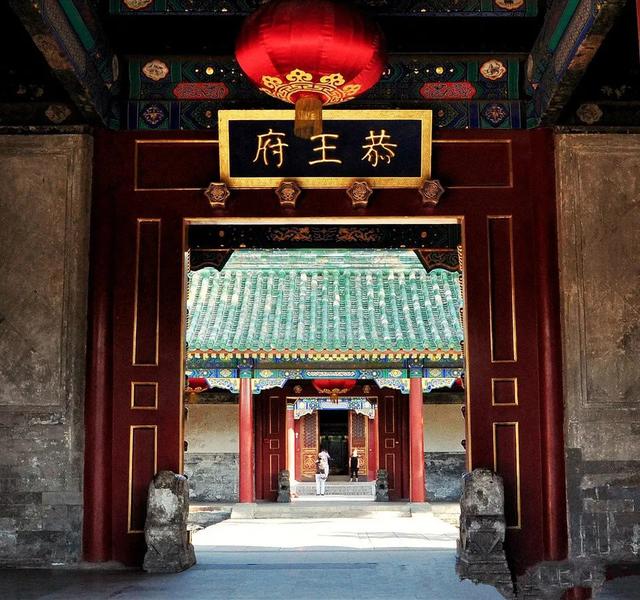
The architectural art of the Prince Gong’s Mansion is distinctive, mainly reflected in the following aspects:
The layout is rigorous and symmetrical along the central axis: The overall architecture of the Prince Gong’s Mansion is divided into three routes: east, middle and west. Each route runs from south to north along a strict central axis, forming a multi-entrance quadrangle courtyard complex. This layout reflects the central axis symmetry feature of the Qing Dynasty royal mansion buildings, highlighting the solemnity and majesty of the architecture. The central buildings are the main body of the prince’s mansion, including the Silver Safety Hall, the Jiale Hall, dll., and they are the venues for holding major ceremonies and sacrificial activities. Jalan timur dan barat merupakan tempat tinggal pangeran dan keluarganya. Tata letaknya cerdik dan zonasi fungsionalnya jelas.
Gaya arsitekturnya memadukan keberagaman: Gaya arsitektur Rumah Pangeran Gong memadukan esensi halaman segi empat utara dan taman Jiangnan. Bangunan mansionnya megah dan megah, dengan ubin kaca hijau di atapnya, binatang-binatang berjongkok yang berdiri di ujung punggung bukit, dan makhluk abadi dan binatang buas di punggung atap, sepenuhnya menunjukkan gaya kekaisaran. Bagian taman didasarkan pada desain “gunung dan perairan, Paviliun, teras, dan bunga dan pohon”, dengan tata letak yang cerdik, bebatuan yang elegan, kolam yang jernih, dan bangunan berpadu sempurna dengan alam, menciptakan suasana tenteram dan luas jangkauannya.
Ukiran dan dekorasinya sangat indah: The buildings and furniture in the Prince Gong’s Mansion are decorated with a large number of exquisite carvings, most of which are related to traditional culture and historical figures. These carved works not only have extremely high artistic value, but also contain profound historical and cultural connotations. Misalnya, all the carvings in the Xijinzhai are made of nanmu wood and were built by Heshen in the style of the Ningshou Palace in the Forbidden City, demonstrating the superb craftsmanship of Qing Dynasty artisans.
The culture of “blessing” runs through the entire process: The Mansion of Prince Gong is renowned as the “Garden of Ten Thousand Blessings”, with over ten thousand “blessing” characters filling the entire garden. Diantaranya, itu “Fu Character Stele” inscribed by Emperor Kangxi is even hailed as “the No. 1 Fu in the World” and is hidden in the Secret Cloud Cave. Selain itu, the bat pond, the grand stage and other buildings and scenic spots in the garden also carry the meaning of “nasib baik”, reflecting the unique “nasib baik” culture of the Prince Gong’s Mansion.
Itu “Three Wonders and One Treasure” in the Prince Gong’s Mansion are a concentrated embodiment of his architectural art, with unique ingenuity. The rear cover building, which served as Heshen’s treasure house, has 44 brick-carved assorted Windows of various shapes on its back, symbolizing good fortune. The Western Gate is the only Western-style building in the garden, reflecting the owner’s acceptance and integration of Western culture. The grand opera house is the only fully enclosed grand opera house that still exists in China. It is made of pure wood and has a delicate construction. Itu “Fu” character stele was written by Emperor Kangxi and holds extremely high historical and cultural value.