Guía de traslados de transporte de viajes de Guangzhou: Navegando por la ciudad con facilidad
Cantón, una metrópolis vibrante que combina el patrimonio histórico con la innovación moderna, Ofrece una red de transporte integral que incluye el metro., autobuses, ferries, y tren de alta velocidad. Para aprovechar al máximo tu viaje, Dominar el arte de trasladarse entre diferentes modos de transporte es esencial.. Aquí tienes una guía detallada que te ayudará a navegar sin problemas por el sistema de transporte público de Guangzhou..
Moverse por el centro de la ciudad: Integración de metro y autobús
Sistema de metro: La columna vertebral de la movilidad urbana
El sistema de metro de Guangzhou es extenso, cubriendo todos los principales distritos y atracciones turísticas. con más 15 líneas y numerosas estaciones de transferencia, es la forma más eficiente de recorrer la ciudad. Por ejemplo, Línea 11, que abrió tarde 2024, conecta cinco distritos centrales: Tianhe, Baiyun, Yuexiu, Liwán, y Haizhu—a través de 31 estaciones, 26 de los cuales son puntos de transferencia. Esta línea "rey de las transferencias" permite un acceso rápido a sitios emblemáticos como la montaña Baiyun, Jardín Yuntai, y el parque del lago Liuhua.
Al hacer transbordos entre líneas de metro, Siga las señales claras que indican direcciones y números de plataforma.. En centros importantes como la estación de tren de Guangzhou y la estación este de Guangzhou, Es posible que se apliquen medidas de derivación temporales durante las fases de construcción., así que revisa los anuncios en tiempo real. Por ejemplo, transferencia entre líneas 11 y línea 8 en la estación de Pazhou requiere una caminata de 6 minutos por un pasillo al aire libre, así que asigna tiempo extra durante las horas pico.
Red de autobuses: Complementando las rutas del metro
Los autobuses llenan los huecos en la cobertura del metro, especialmente en distritos históricos con calles estrechas. El sistema de autobuses de la ciudad se integra con las estaciones de metro., ofreciendo traslados convenientes. Por ejemplo, para llegar a la isla Shamian, un enclave de la época colonial con arquitectura de estilo europeo, tome Line 1 o 6 a la estación Huangsha, luego transfiera al autobús 105 o 208 para un corto viaje hasta la entrada de la isla..
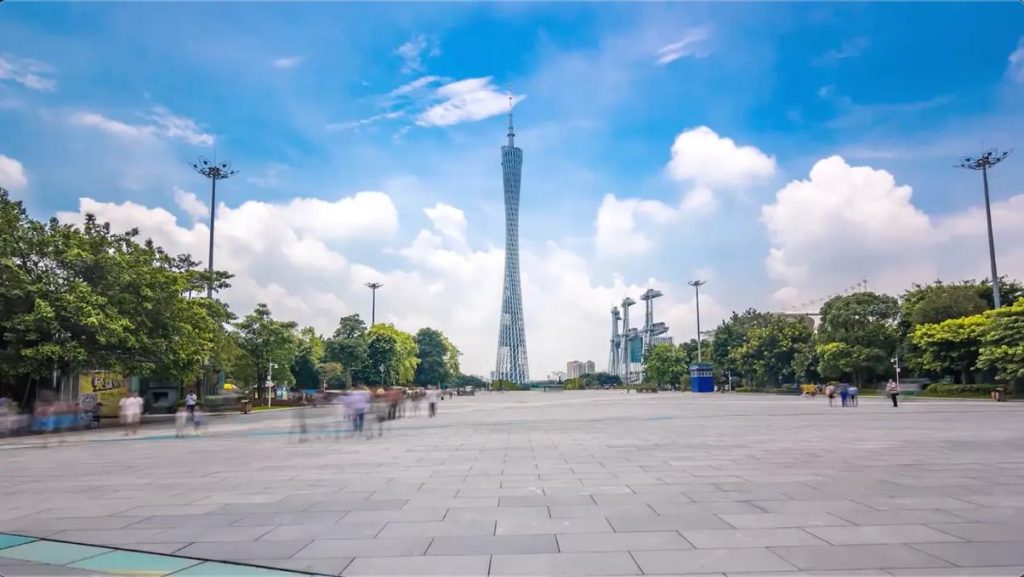
Durante eventos importantes como el Festival Internacional de la Luz de Guangzhou, Los autobuses ajustan sus horarios para adaptarse a las multitudes.. Del 16 al 26 de noviembre, 2025, Se ofrecen servicios adicionales en rutas cercanas a la plaza Huacheng y la Torre de Cantón., con despachadores dedicados que monitorean el flujo de pasajeros para minimizar los tiempos de espera. Utilice aplicaciones de seguimiento de autobuses en tiempo real para planificar su viaje de manera eficiente.
Conexión con aeropuertos y estaciones de tren: Estrategias de transferencia multimodal
Aeropuerto Internacional de Baiyun: Un centro de conectividad
Aeropuerto de Baiyun, uno de los más activos de Asia, ofrece múltiples formas de llegar al centro. La recién inaugurada Terminal T3 introduce una línea turística exclusiva (transporte turístico) vinculando T1, T2, y terminales T3 cada 20-30 minutos desde 9 soy a 4 P.M. Un pase diario de 10 yuanes permite viajes ilimitados, ideal para viajeros que exploran las maravillas arquitectónicas del aeropuerto antes de sus vuelos.
Para transferencias más rápidas, tome el tren interurbano del anillo este de Guangzhou hasta la estación este del aeropuerto de Baiyun, con conexiones desde líneas de metro 2, 3, 7, y 22 en estaciones como la estación de tren de Guangzhou Sur y la estación de Gaozeng. y gaozeng, un autobús directo llega a la T3 en 15 minutos, costear 2 yuanes por viaje. También se encuentran disponibles servicios de taxi y transporte compartido., con puntos de recogida designados en el nivel de llegada de la T3 para evitar congestiones.
Estaciones de tren de alta velocidad: Enlaces interurbanos fluidos
Estación de tren sur de Guangzhou, un centro importante para los trenes a Shenzhen, Hong Kong, y más allá, prioriza transferencias fluidas. A llegado, siga las indicaciones para "multiplicación de conversión media" (traslado interurbano) para llegar a plataformas de conexión sin salir. Para traslados en metro, Utilice el “Control de seguridad unidireccional gratuito” (exención de seguridad unidireccional)通道 en la salida A de la estación de metro., ahorrar tiempo durante las horas pico.
Si se dirige a Shenzhen, Los trenes salen cada 10-15 minutos por la mañana., con viajes que duran entre 30 y 90 minutos dependiendo de la ruta. En el sur de Guangzhou, Las zonas de recogida rápida P5 y P1 cercanas a las salidas N10 y S1 reducen los tiempos de espera de los vehículos particulares. Para viajeros de larga distancia, La terminal de autobuses de la estación ofrece autobuses a destinos provinciales como Zhuhai y Zhongshan..
Explorando las atracciones costeras: Opciones de ferry y transporte fluvial
Ferris del río Perla: Escénico y funcional
El río Perla, un salvavidas de Guangzhou, alberga ferries que conectan lugares históricos y modernos. Desde el muelle de Fangcun, da un paseo hasta el antiguo puerto de Huangpu para explorar la historia marítima, o dirígete a Canton Tower Wharf para disfrutar de vistas panorámicas del horizonte. Los ferries operan diariamente, con servicios frecuentes durante fines de semana y festivos.
Las recientes actualizaciones de planificación hacen hincapié en la ampliación de las rutas de ferries turísticos, particularmente en los distritos de Nansha y Panyu, para apoyar el turismo de yates. Los nuevos muelles cerca de Wanqingsha y Xintang dan cabida a embarcaciones más grandes, mientras que las terminales existentes en la isla Shamian y la calle peatonal Beijing Road siguen siendo populares para cruceros cortos. Consultar horarios con antelación, ya que los servicios pueden ajustarse estacionalmente.
Actualizaciones de puertos interiores: Mejorando el acceso fluvial
Red de puertos interiores de Guangzhou, que abarca Baiyun, Huadu, y Zengcheng, integra el transporte de mercancías y pasajeros. El 2025 El plan de remodelación portuaria asigna más costa a los ferries turísticos., reducir la dependencia del tráfico rodado. Por ejemplo, El nuevo puerto de Wanjingsha en Nansha cuenta con terminales de pasajeros exclusivas con acceso directo al metro a través de Line 18, reducir a la mitad el tiempo de viaje al centro de la ciudad.
Al visitar atracciones frente al río como la Academia Militar de Huangpu o el complejo turístico Changlong, combine viajes en ferry con traslados en autobús o metro. Desde la terminal de ferry de Fangcun, Autobús 25 llega a Huangpu en 40 minutos, mientras que un taxi desde la terminal de ferry de Pazhou a Changlong tarda 15 minutos durante las horas de menor actividad.
Consejos prácticos para transferencias sin estrés
- Planifique con anticipación: Utilice aplicaciones de tránsito oficiales para consultar horarios y actualizaciones en tiempo real, especialmente durante eventos o construcción.
- Permitir tiempo de reserva: Considere entre 10 y 15 minutos adicionales para transferencias entre modos, particularmente en grandes centros como la Estación Sur de Guangzhou.
- Aprovechar la tecnología: Habilite opciones de pago móvil como Alipay o WeChat Pay para la compra de billetes en autobuses, ferries, y algunas lineas de metro.
- Manténgase informado: Siga los medios de comunicación locales o las autoridades de transporte en las redes sociales para conocer interrupciones del servicio o cambios temporales de ruta..
Entendiendo el sistema de tránsito interconectado de Guangzhou, Puedes explorar las diversas atracciones de la ciudad, desde templos antiguos hasta torres futuristas, con mínimas molestias.. Si eres un aficionado a la historia, Conocedor gourmet, o amante de la naturaleza, Los traslados eficientes garantizan que cada momento de su viaje esté bien aprovechado..